
Moving Pets to Romania: Microchipping, EU Pet Passports, and Customs Clearance
Moving pets to Romania requires ISO microchips, EU pet passports, and customs clearance. Learn entry rules, timelines, costs, and relocation logistics.
Relocating across borders involves coordinating countless moving parts, but bringing a four-legged family member requires distinct, time-sensitive precision. When planning on moving pets to Romania, expats, returning citizens, and corporate transferees must navigate strict European Union sanitary regulations, complex transit logistics, and cross-border veterinary documentation. Whether arriving from an EU member state such as Germany or the Netherlands, or navigating third-country protocols from the United States or post-Brexit United Kingdom, advance preparation ensures your dog or cat enters the country safely without delays or quarantine.
Pet relocation cannot be treated as an afterthought alongside shipping your household items. While your furniture moves via dedicated road transport or maritime shipping, your pet travels on a scheduled commercial flight, manifest cargo route, or overland vehicle. Synchronizing these arrivals requires working closely with international moving experts who understand how border inspections, customs protocols at Bucharest Henri Coandă Airport (OTP), and destination logistics intersect to deliver a stress-free transition.
Veterinary Requirements for Bringing Dogs and Cats to Romania
Bringing dogs and cats into Romania requires an ISO 11784/11785 microchip, a valid rabies vaccination administered strictly post-microchipping, and an authorized travel health certificate or EU Pet Passport. Pets arriving from high-risk, unlisted third countries also mandate an approved rabies antibody titer test completed at least three months prior to departure.
Failure to sequence these medical steps in the precise legal order invalidates your pet's documentation at the border, leading to refused entry, costly quarantine, or forced repatriation at the owner's expense under Regulation (EU) No 576/2013.
Microchipping Standards
Your pet must be implanted with an ISO 11784/11785-compliant 15-digit microchip before receiving its rabies vaccination. The transponder operates at 134.2 kHz and must be readable by standard European scanners. If your pet possesses a non-compliant microchip (such as certain 10-digit AVID chips used in North America), you must either carry your own scanner or have an accredited veterinarian implant an ISO-compliant chip alongside the existing one, recording both transponder numbers in all official travel files.
Rabies Vaccination Protocols
Romania requires all cats, dogs, and ferrets over 12 weeks of age to be fully immunized against rabies. Strict rules apply:
- Sequencing: The vaccination is legally valid only if administered on the same day as, or after, the ISO microchip implantation. Vaccines given before microchipping are rejected by Romanian border veterinary inspectors.
- Waiting Period: A mandatory 21-day incubation window must elapse after a primary rabies vaccination before entering Romania.
- Booster Validity: Routine booster vaccinations do not incur a 21-day delay if administered within the documented validity period of the previous vaccine without any lapse in coverage.
- Multi-Year Vaccines: Romania recognizes 2-year and 3-year rabies vaccinations, provided the administering veterinarian has recorded the valid expiration date clearly in the travel paperwork.
Rabies Titer Testing (For Unlisted Third Countries)
If you relocate to Romania from an unlisted third country with active rabies risks (such as Turkey, Egypt, Serbia, or South Africa), an antibody titer test is compulsory. A licensed veterinarian must collect a blood sample at least 30 days post-vaccination. The sample must be processed by an EU-approved laboratory demonstrating a neutralizing antibody titer equal to or greater than 0.5 IU/ml. Following a successful draw, a three-month waiting period must pass before the pet can enter Romania. Pets originating in EU member states or listed third countries (such as the US, Canada, Great Britain, Switzerland, and Australia) are exempt from this titer waiting protocol.
EU Pet Passports vs. Non-EU Health Certificates: Documentation You Need
Pets entering Romania from within the European Union require only a standard EU Pet Passport, while companion animals arriving from non-EU territories require an official non-commercial EU Health Certificate. Both documents verify that the pet meets all microchip, rabies vaccination, and parasite control criteria before crossing Romanian borders.
Travel Within the European Union
For pets originating in EU member states, the blue EU Pet Passport is the sole required medical transit document. Issued by an authorized veterinary practitioner, it details ownership, description, microchip number, and rabies immunization history. As long as booster coverage remains uninterrupted, no additional governmental export stamps or transit endorsements are needed when crossing into Romania.
Entering Romania from Non-EU Countries (Third Countries)
If you are relocating from the United States, Canada, Australia, or moving from the UK, your pet cannot enter on a standard domestic clinic booklet. If your journey involves the UK, review our guide on Moving from Romania to the UK after Brexit: Customs, Regulations & Costs to understand bilateral animal and cargo logistics. For non-EU entries into Romania, you must secure:
- EU Health Certificate: Completed and signed by an accredited official veterinarian no more than 10 days before your pet's arrival at the Romanian border.
- Official Endorsement: Stamped by the competent national authority (such as USDA APHIS in the United States or APHA in the United Kingdom).
- Non-Commercial Declaration: Signed by the owner or authorized courier certifying the move does not constitute an animal sale or commercial transfer of ownership.
- Designated Border Control Post (BCP): Arrival must occur via an authorized Point of Entry with an operational veterinary unit (PIF), such as Bucharest Henri Coandă Airport (OTP).
Step-by-Step Process for Relocating Pets and Household Goods
Relocating companion animals alongside personal effects requires executing veterinary steps and cargo bookings in a coordinated sequence over several months. Following this structured roadmap prevents administrative delays and ensures your pet and furniture arrive in sync.
- Evaluate Route and Medical Rules (Months 4–6): Check whether your origin country requires an EU-approved rabies titer test. Administer required microchips and vaccinations in the legally mandated order.
- Request Relocation Survey and Freight Booking (Months 2–3): Book a pre-move survey / estimate to calculate the volume of your household items in CBM (m³). Determine whether your belongings will ship via dedicated road freight, full container load, or cost-effective groupage / part-load transport.
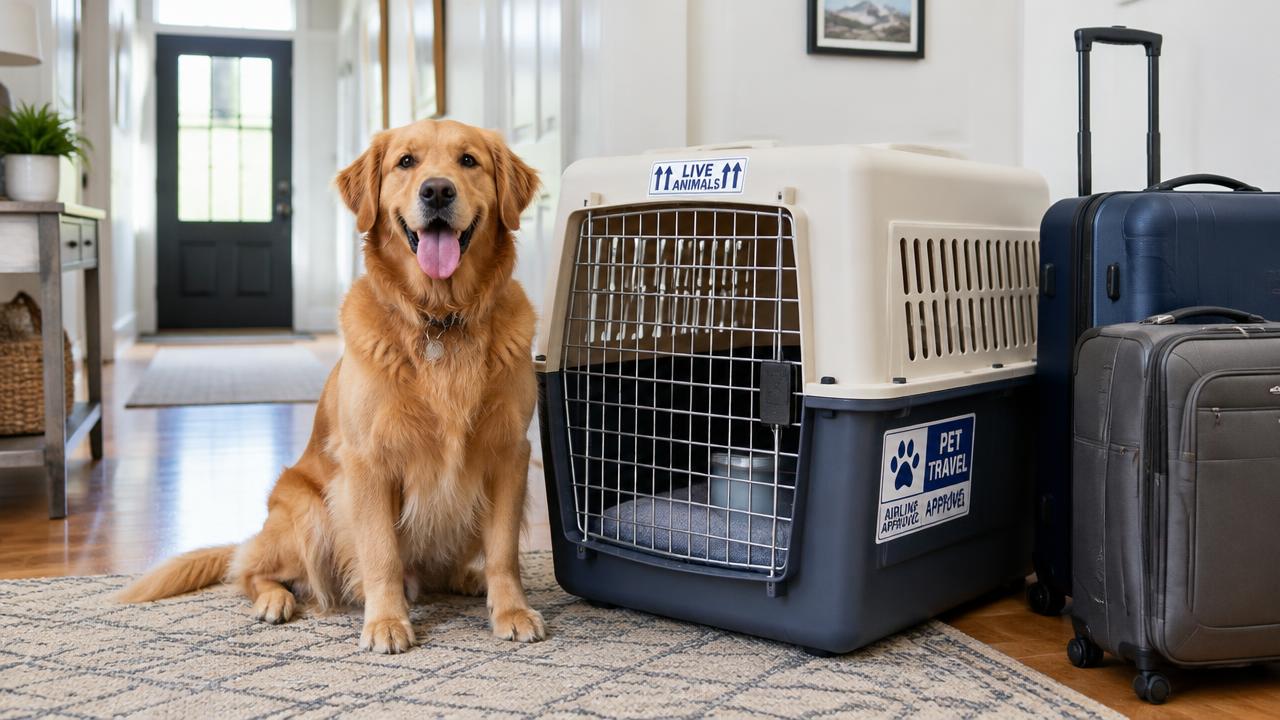
- Secure Airline Pet Space and Crates (Months 2–3): Reserve pet cabin space or manifest cargo transit with your airline. Purchase an IATA-compliant pet travel carrier and acclimatize your pet to crate rest.
- Assemble Customs and Personal Effects Documentation (Month 1): Prepare your household inventory list and application for transfer of residence tax relief to eliminate import duties on personal items entering Romania.
- Complete Pre-Travel Health Exams (Days 1–10): Visit an accredited veterinarian to issue the EU Health Certificate or update the EU Pet Passport. Obtain official government veterinary endorsement where required.
- Border Clearance and Settling-In (Arrival Day): Present your pet to border veterinary officers at Bucharest Henri Coandă Airport (OTP), complete the personal effects customs declaration for your cargo, and head to your new Romanian residence.
Indicative Relocation Costs and Corridor Transit Timelines
Moving a pet and household goods to Romania involves distinct operational budgets based on freight corridors, transport methods, and pet carrier sizes. While road corridors from Germany or the Netherlands offer predictable drive times, intercontinental flights from North America involve customs handling fees and air cargo rates.
| Relocation Corridor | Pet Transport Mode | Indicative Pet Cost (EUR) | Household Goods Mode | Indicative Household Transit Time |
|---|---|---|---|---|
| Germany to Romania | Road vehicle / In-cabin air | €350 – €800 | Dedicated truck / Groupage | 3 to 7 business days |
| Netherlands to Romania | In-cabin air / Excess baggage | €400 – €950 | Road freight (CBM-based) | 4 to 8 business days |
| United Kingdom to Romania | Manifest air cargo / Pet courier | €900 – €1,850 | Road transport (with CMR) | 5 to 10 business days |
| United States to Romania | IATA manifest cargo | €1,400 – €2,800 | Ocean FCL/LCL via Constanța port | 25 to 40 calendar days |
Note: Figures are indicative estimates and vary by animal breed, crate dimensions, seasonal airline surcharges, and total cargo volume. Request a tailored quote to determine precise figures for your corridor.
Customs Clearance and Freight Synchronization in Romania
Importing companion animals and personal property through Romanian customs requires managing two separate administrative workflows that converge upon your arrival. Pet clearance occurs at the point of passenger entry, whereas household goods clear customs through freight terminals or maritime checkpoints.
When your household items travel across borders, they travel under a CMR consignment note—the standardized international road transport document establishing freight liability—or an ocean bill of lading if arriving via Constanța port. Non-EU transferees must secure a Romanian EORI number (Economic Operators Registration and Identification) to process their personal effects customs declaration under duty-free transfer of residence rules. Protecting your belongings during road or sea transit with all-risk transit insurance guarantees full replacement coverage against transit damage.
Professional relocation teams operating under international industry frameworks—such as the International Association of Movers (IAM) or the European Federation of International Movers (FEDEMAC)—ensure these logistics integrate smoothly. For corporate teams and mobility specialists wanting deeper insights into digital freight tracking and move management workflows, see our analysis of The Modern International Mover's Stack: From Inbound Agent RFQs to Destination Customs & Digital FAIM Inventories. Coordinating pet flights with door-to-door household goods transit avoids keeping animals in temporary kennels while waiting for housing handovers.
Settling Your Pet into Romania: Housing, Vets, and Bucharest Life
Settling your pet into Romania requires registering with a licensed local veterinary clinic, securing microchip updates in the national pet registry (RECS), and adapting to city-specific animal regulations. Bucharest is a pet-friendly city with accessible green spaces and a high concentration of modern veterinary practices.
Expat-friendly neighbourhoods in northern Bucharest—such as Floreasca, Primăverii, Aviatorilor, and Pipera—offer quick access to expansive parks like Parcul Regele Mihai I (Herăstrău) and Parcul Bordei. Many rental properties welcome pets, though landlords often require an additional security deposit or specific lease addendums. High-standard veterinary facilities offering 24/7 emergency services, diagnostic imaging, and English-speaking staff are widely available across Bucharest and other major hubs like Cluj-Napoca and Timișoara. To coordinate a seamless move for your entire family, request a free relocation estimate.
FAQ
Do pets have to undergo quarantine when entering Romania?
No, Romania does not impose quarantine on dogs and cats entering the country, provided they fulfill all European Union sanitary rules. Your pet must have an operational ISO microchip, an authenticated rabies vaccine administered after chipping, and a valid EU Pet Passport or an officially endorsed third-country health certificate. Non-compliant documentation can, however, trigger border quarantine at the owner's expense.
Can I bring my dog into Romania in the airplane cabin?
Yes, many European carriers allow small dogs and cats weighing up to 8 kilograms (including the soft-sided travel bag) to fly in the aircraft cabin. Animals exceeding this weight threshold must travel as checked excess baggage or manifest air cargo inside an IATA-approved rigid crate equipped with secure water bowls and proper ventilation.
What is the RECS system, and must I register my dog in Romania?
RECS (Registrul de Evidență a Câinilor cu Stăpân) is Romania's official national registry for owned dogs. By law, all dogs residing in Romania must be recorded in this database by an authorized local veterinarian. During your initial clinical visit, the vet scans your dog's microchip, logs ownership details, and issues a Romanian health book.
How do I synchronize pet travel with my household goods delivery?
The safest approach is booking pet transport to coincide with your personal travel dates while scheduling your household freight delivery shortly after your lease begins. Using a door-to-door moving service ensures that heavy packing materials, furniture, and pet supplies arrive at your new residence without requiring your pet to stay in unfamiliar boarding facilities.
Get a moving quote
Estimate your volume in cubic metres and get an instant price range in minutes — no home visit needed.