
Chain of Custody in IT Asset Logistics Romania: From Collection to Cross-Border Delivery
Secure IT asset logistics Romania: serial verification, tamper-evident packaging, Chitila buffer storage, and consolidated road freight to Western Europe.
Enterprise IT asset disposition (ITAD) requires total visibility, rigorous compliance, and strict hardware verification at every touchpoint. In an era dominated by distributed tech talent across Eastern Europe, managing IT asset logistics Romania has evolved from basic courier parcel dispatch into a disciplined, high-security supply chain process. When multinational corporations offboard software engineers in Bucharest or de-commission enterprise data suites in Cluj-Napoca, hardware cannot simply be handed over without a verified protocol. Laptops, enterprise monitors, docking stations, and servers carry both sensitive corporate data and significant residual balance-sheet value.
For international mobility managers, corporate enterprise real estate teams, and European IT asset managers, retrieving and repatriating company hardware across borders demands end-to-end chain of custody. This starts from an individual employee's doorstep in a communist-era block in Bucharest or a modern development in Pipera, extends through dedicated regional consolidation hubs, and finishes at primary refurbishment facilities in Western Europe. Maintaining complete traceability requires purpose-engineered operational workflows, standardized documentation, and real-time digital logging.
As Romania continues to operate as an essential engineering and shared services base within the European Union, standard courier services often fail to meet corporate data governance mandates. Specialized enterprise logistics providers bridge this gap by delivering secure, serial-verified, and insured collection networks designed explicitly for corporate technology estates.
What is Chain of Custody in Romanian IT Asset Logistics?
Chain of custody in IT asset logistics refers to the chronological, tamper-evident documentation and physical security protocols that track an electronic asset from the instant it leaves corporate or employee hands until its verified delivery. In corporate IT asset disposition (ITAD), an unbroken chain of custody ensures that every serial number is accounted for, data-bearing devices are never left unattended, and legal responsibility is transferred with explicit verification at every staging point.
When recovering assets from remote workers or regional offices in Romania, establishing this chain begins before physical pickup occurs. Corporate IT departments upload an itemized inventory list containing device hostnames, serial numbers, user profiles, and original hardware specifications. During physical collection, the logistics agent compares the physical chassis label against the master manifest, scanning serial barcodes into the inventory management system.
To guarantee zero undetected tampering between pickup and warehouse sorting, items are packed in heavy-duty anti-static barrier bags and closed using serialized, numbered tamper-evident security labels. If an unauthorized person attempts to peel or slit the seal, an indelible patterned void notification appears across the tape film, immediately alerting receiving teams. Once verified, the logistics field agent and the offboarding employee execute a formal dual-signature handover certificate, creating an indisputable legal record of transfer.
Remote Employee Hardware Retrieval Across Romanian Urban Centers
Remote employee hardware retrieval in Romanian cities requires meticulous operational planning to manage urban access bottlenecks, building infrastructure quirks, and strict scheduling windows. Unlike Western European collections that often rely on standard drop-off points, Romanian IT recoveries frequently require true door-to-door collection directly from private residences to eliminate loss risks.
Executing residential collections across central Bucharest, Sector 1 through Sector 6, introduces specific logistical variables that field crews must navigate:
- Parking and Pedestrian Zones: High-density residential corridors (such as Floreasca, Dorobanți, and Militari) frequently lack authorized commercial loading bays. Drivers must arrange dedicated, timed pickup slots to prevent vehicle abandonment while securing multi-device consignments.
- Elevator and Stair Access: A significant portion of urban Romanian housing stock consists of mid-century four- to ten-story apartment blocks. When passenger elevators are absent, out of service, or too compact to accommodate bulk monitor cartons, field specialists manually carry reinforced flight cases up multiple flights.
- Intercom and Security Gates: Gated residential complexes in northern Bucharest (Pipera, Voluntari, Otopeni) require prior visitor pre-clearance and resident gate authorization, making direct driver-to-employee communication channels mandatory.
- Regional Routing: Collections outside the capital—including primary IT clusters like Cluj-Napoca, Timișoara, Iași, Brașov, and Sibiu—require synchronized regional routing to aggregate assets efficiently without introducing multi-day security blind spots.
For corporate HR and IT directors coordinating multi-regional departures, requesting an initial logistics free relocation estimate ensures route schedules, packaging allocations, and on-site access specifications are modeled accurately ahead of onboarding or offboarding deadlines.
Packaging Standards and UN 3481 Compliance for IT Hardware
IT hardware collection requires specialized electrostatic discharge (ESD) shielding and rigid exterior packaging to withstand handling, vibration, and environmental changes during transport. Standard corrugated boxes are insufficient for delicate enterprise hardware; ITAD operations demand engineered packing materials, including double-wall (5-ply) corrugated shipping cartons, pre-molded polyethylene foam corners, and anti-static bubble sleeves.
Transporting laptops, tablets, and wireless peripherals also introduces strict safety classifications because these devices contain integrated lithium-ion cells. Under international ADR (road transport) regulations, these shipments fall under class 9 dangerous goods classifications. For deeper regulatory details regarding transport labels, maximum battery watt-hour thresholds, and certified box markings, explore our guide on Shipping Lithium Batteries (UN 3481) in IT Asset Collections: Operations & Compliance Guide.
Standard packaging allocations per remote workstation pickup typically include:
- One dedicated heavy-duty laptop carton with custom ESD foam suspension inserts capable of dampening road shocks.
- One double-wall monitor box fitted with variable foam edge guards to secure 24- to 34-inch displays without screen pressure.
- Heavy-duty anti-static zip bags for peripheral mice, mechanical keyboards, external drives, and docking stations.
- Individually barcoded, numbered tamper-evident seals applied across every outer flap intersection.
Buffer Storage and Consolidation at the Chitila Logistics Hub
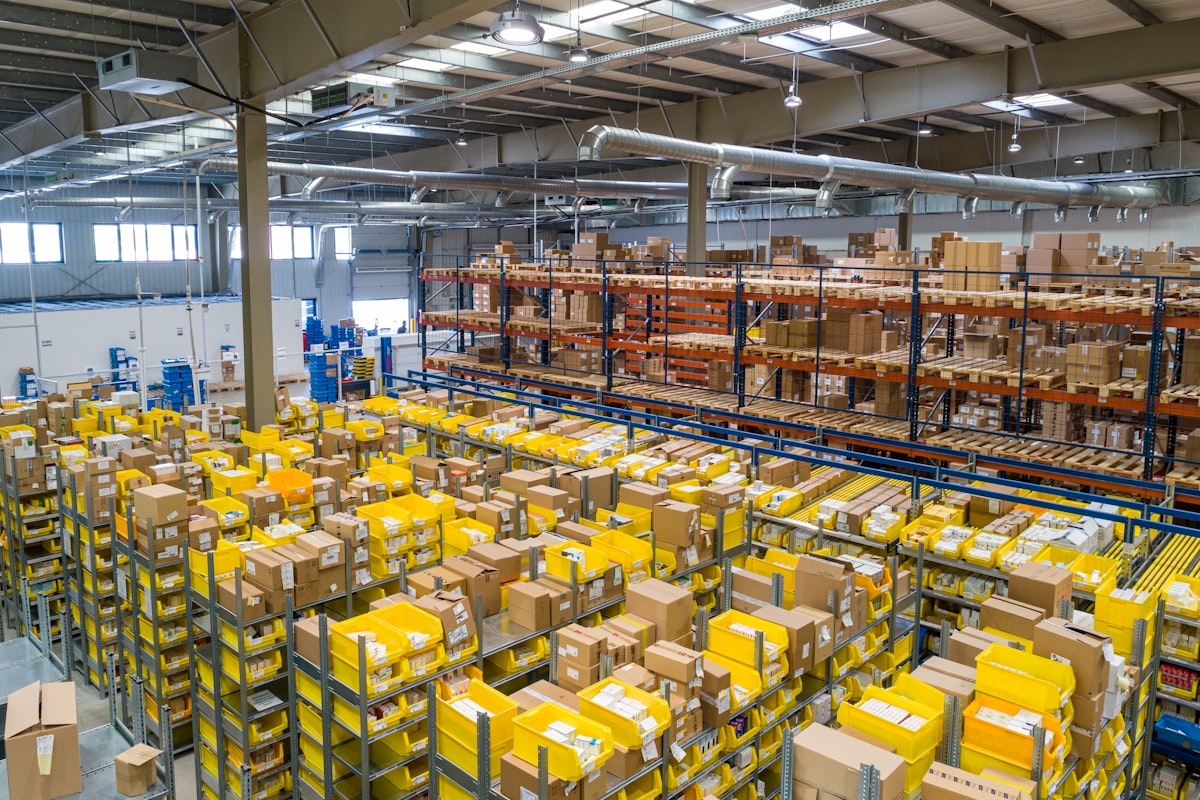
Buffer storage provides multinational enterprises with a secure staging environment where recovered hardware can be inspected, batched, and palletized prior to bulk long-haul dispatch. Rather than dispatching individual, cost-prohibitive single parcels to corporate headquarters across Western Europe, local collections are routed to a centralized warehouse hub in Chitila, Ilfov County, situated directly on the Bucharest northern logistics ring road.
The Chitila facility operates under strict physical and digital controls:
- Climate-Controlled Environment: Prevents condensation and thermal degradation on sensitive circuit boards during freezing Romanian winters or high-heat summer periods.
- CCTV and Biometric Access: High-value asset secure cages monitored 24/7 with strict visitor logs and keycard authorizations.
- Volumetric Optimization: Inbound items are scanned, palletized, and measured to calculate precise volume in CBM (m³), ensuring maximum vehicle density for subsequent line-haul freight.
- Relo One Tracking Integration: Assets scanned into the Chitila facility automatically update within the proprietary Relo One management platform, providing corporate mobility and IT leads with real-time status visibility across every serial tag.
Enterprises managing office closures alongside equipment returns often combine secure buffer storage with business property transitions. For wider comparisons on managed regional warehousing solutions, review our analysis on Self-Storage vs Depozitare cu Mutare Inclusă în București: Ghid și Tarife or read about long-term corporate furniture holds in Furniture Storage in Bucharest for Expats: 2026 Pricing, Inclusions, and Collection Process.
Cross-Border Consolidated Road Freight to France and Western Europe
Cross-border road freight connects Romanian consolidation hubs directly to central European ITAD centers, secondary markets, and corporate headquarters in France, Germany, Belgium, and the Netherlands. Road transport via scheduled line-hauls represents the most cost-effective, low-carbon, and secure routing method for aggregated corporate technology assets within the European single market.
Consolidated shipments travel as groupage / part-load line-hauls, where secure, shrink-wrapped euro pallets share dedicated trailer space with other commercial freight while remaining fully segregated within lockable mesh pallets. Key transport components include:
- CMR Consignment Note: Every road shipment is governed by a legally binding CMR consignment note, which identifies the sender, the carrier, the recipient, the pallet count, and the exact weight, serving as the international document of carriage under the CMR Convention.
- Transit Time Reliability: Standard transit time for road line-hauls operating between the Chitila logistics hub and processing facilities in Paris, Lyon, or Lille typically ranges between 3 to 5 business days, routed through Hungary, Austria, and Germany without border customs delays.
- Comprehensive Cargo Protection: While carrier baseline liability under the CMR Convention is limited strictly by weight (approximately 8.33 SDRs per kilogram), enterprise electronics demand robust financial safety. Shipments are backed by specialized all-risk transit insurance, covering the actual commercial replacement value of the hardware against transit damage, theft, or catastrophic loss.
For multinational corporations coordinating overseas relocations alongside complex technology repatriation, our full-service international moving operations coordinate both employee family relocations and corporate infrastructure projects under compliant, unified logistics frameworks.
IT Asset Logistics Operations and Workflow Comparison
Managing the chain of custody across various stages requires differentiated physical and administrative handling protocols:
| Operational Stage | Location / Scope | Core Documentation | Primary Security Controls | Standard Handling Window |
|---|---|---|---|---|
| Residential Remote Collection | Employee Home (Bucharest / Regional Romania) | Signed Physical / Digital Handover Form | Chassis Serial Scan, Numbered Tamper-Evident Security Seals | Scheduled 2-Hour Window |
| Commercial Office De-commission | Corporate Facilities (e.g., Pipera, Aurel Vlaicu) | Master Inventory List & Asset Manifest | Bulk Caging, Anti-Static Pallet Wrapping, Floor Protection | 1 to 2 Working Days |
| Buffer Warehouse Processing | Chitila Logistics Hub (Ilfov) | Warehouse Receipt & Barcode Ingestion Log | 24/7 CCTV Caging, Relo One System Updates, CBM Verification | 24 to 48 Hours Staging |
| Cross-Border Line-Haul | Chitila to France / Benelux / Germany | CMR Consignment Note & Dangerous Goods Declaration | Sealed Box Trailers, GPS Geo-fencing, All-Risk Transit Insurance | 3 to 5 Business Days Transit |
Step-by-Step IT Asset Collection and Shipping Process
Recovering distributed hardware while maintaining compliance with international asset management standards follows an established sequential workflow:
- Manifest Generation and Schedule Coordination: The corporate client submits the asset manifest detailing device models, serial tags, employee locations, and offboarding deadlines. Relo One generates unique collection tokens for each asset.
- Secure Packaging Dispatch and On-Site Verification: A field technician arrives at the employee's residence with ESD protective sleeves and certified outer cartons. The technician inspects the device exterior, scans the hardware serial barcode, and confirms a match against the master token.
- Tamper-Evident Sealing and Dual-Signature Handover: The equipment is placed into custom packaging, sealed with serialized void-tape, and logged. Both the employee and technician sign the collection manifest on-site, instantly triggering an automated confirmation email to corporate IT.
- Secure Transport to Chitila Consolidation Hub: The asset is transported via dedicated courier van to the secure Chitila facility, where the tamper-evident seal is verified as intact, weighed, measured in CBM, and moved into high-security caged staging.
- Consolidation and Palletization: Individual asset cartons are consolidated onto standard euro-pallets, wrapped in opaque anti-tamper film, fitted with impact indicators, and staged for cross-border dispatch.
- Line-Haul Dispatch under CMR: Pallets are loaded onto scheduled road trailers bound for France or other European destinations. The CMR consignment note is countersigned, GPS tracking is initiated, and the client monitors cargo progress through the Relo One portal until final delivery at the designated ITAD destination.
Why Multinational Enterprises Partner with Eerelo
Managing IT equipment recovery through disparate couriers, unvetted freight forwarders, and standard postal channels introduces unacceptable data security risks, operational overhead, and asset attrition. Eerelo delivers an institutional-grade logistics bridge connecting distributed Romanian talent pools with corporate headquarters across the European Union, the United Kingdom, and the United States.
As active members of leading international moving and logistics federations such as IAM (International Association of Movers) and FEDEMAC (European Relocation Federation), we uphold the industry's highest operational and compliance benchmarks. Our dedicated Chitila logistics terminal provides the secure warehousing, technical packaging expertise, and automated asset visibility enterprise IT teams require to maintain an airtight chain of custody. From single laptop retrievals in Timișoara to full data-center decommission projects in Bucharest, our cross-border logistics infrastructure ensures your enterprise hardware is recovered efficiently, tracked accurately, and delivered safely.
FAQ
What happens if the serial number on the laptop does not match the corporate inventory list during collection?
If a serial number mismatch occurs during an on-site collection, the field specialist halts the packaging process and contacts the client's corporate IT administrator. The discrepancy is documented with high-resolution photographs of the device chassis and serial plate, recorded in the Relo One digital portal, and collection only proceeds once the enterprise team authorizes an updated manifest.
How are monitors protected against screen damage during domestic transit in Romania?
Monitors are fitted with anti-static foam screen protectors and high-density corner guards before being secured inside heavy-duty double-wall corrugated cartons. For high-value or ultrawide displays, specialized flight cases with customizable pick-and-pluck foam interiors are used to isolate the panel from road vibrations and handling shocks.
Can remote employees choose their own pickup time window for hardware return?
Yes, remote employees receive a digital scheduling link once their retrieval order is initialized. They can select a dedicated two-hour arrival window that accommodates their schedule, avoiding the open-ended, all-day waiting periods common with standard commercial parcel delivery services.
How is corporate data protected during buffer storage at the Chitila facility?
The Chitila logistics hub maintains dedicated secure storage cages protected by electronic access control, 24/7 internal CCTV surveillance, and strict perimeter fencing. Devices remain inside their sealed, tamper-evident outer packaging throughout buffer holding, ensuring physical data ports and internal drives are never accessible to unauthorized personnel.
What documentation is provided after the equipment reaches the final ITAD facility in France?
Upon final delivery at the European receiving facility, the carrier obtains a signed and stamped CMR consignment note confirming receipt. A final delivery manifest reconciling each serialized seal and hardware tag is generated, closing the chain of custody and providing corporate compliance teams with a complete audit trail.
Get a moving quote
Estimate your volume in cubic metres and get an instant price range in minutes — no home visit needed.